Mind & Commute
Monday Blues and the Region Beta Paradox: Why We Fix Big Problems and Ignore the Ones That Drain Us
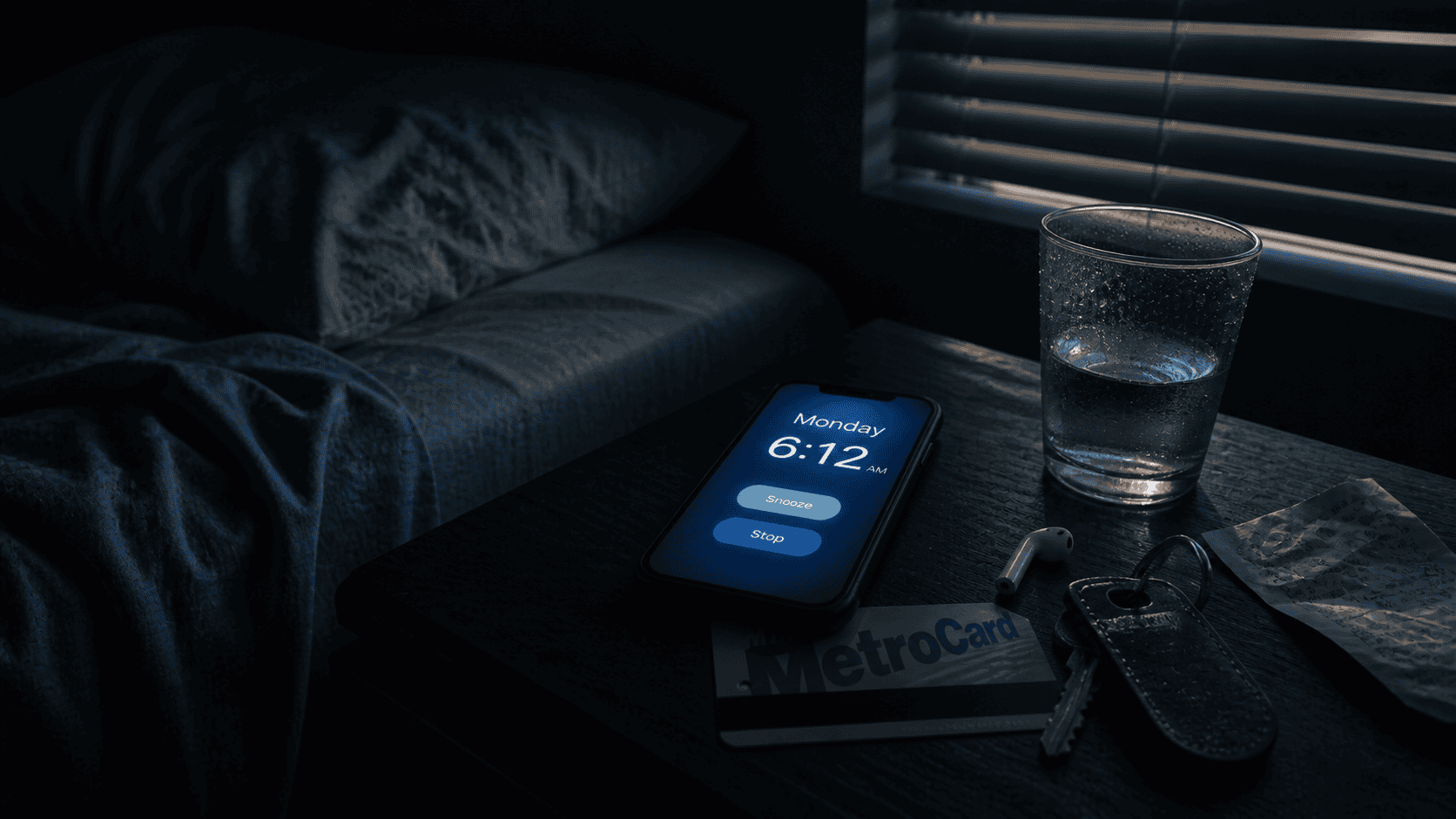
“I dread Monday.”
It’s one of the most common thoughts among everyday workers. The monday blues. The sunday scaries. That sinking feeling on Sunday night that the alarm will go off, the rush will begin, and the whole grind starts again.
For many of us, just the thought of going to work feels draining. Exhausting. And the cause? Obvious. It’s the job. The boss. The coworkers. Right?
Well, what if it isn’t the job at all?
What if the exhaustion we associate with work is actually caused by accumulated friction, those small, repeated annoyances that quietly wear us down before 9 a.m.? Not the work. The trip to the work.
The human brain isn’t very good at identifying the true source of stress, especially when it comes from minor, recurring frustrations. We tend to pin the bad mood on something big. Individually, these moments feel insignificant. But over time, they compound. The brain begins to label the entire experience, the commute, the workday, even the job, as something to dread.
And that’s how monday blues are born.
Why the Commute Is the Perfect Friction Machine
The fun begins the moment we leave the door.
“Oh no, the keys.” Bag straps digging into the shoulders. Noisy trains. Noisy people. Thirsty. Can’t unwind from the morning rush. The phone is dying. Traffic. Bored. Rude people. Long lines. Rain. Forgot lunch. Missed the bus. Running out of gas. Coming late to work. Too cold. Too hot. Tired legs. Germs. No seats. Tangled headphones.
And it’s not even 9 AM. And again after 5.
By the time we arrive at work, the brain has already spent its entire patience budget.
The morning friction inventory
Micro stressors between door and desk
None of these triggers alarm. All of them drain.
This mountain of minor miseries isn’t just annoying. It’s a psychological trap: we dismiss them as too insignificant to resolve.
Why Small Frustrations Hurt More Than Big Ones
Our brains are wired to respond to big threats and major life events, not small, everyday problems. This isn’t a personal shortcoming. It’s a well-documented psychological phenomenon.
In 2004, psychologist Daniel Gilbert described the region beta paradox. In simple terms, it means that intense negative experiences trigger our psychological defenses, a set of cognitive tools that help us rationalize, reframe, and recover. But mild negative experiences fall below that threshold. They never activate the defenses. So we endure them indefinitely.
Gilbert’s original paper literally uses a commuting example: a person who walks to nearby destinations and bikes to farther ones will sometimes arrive at distant locations sooner, because the greater distance triggers a faster mode of transport. The closer destination, which seems easier, actually takes longer.
When something feels serious enough, we take action. But when a problem feels small, an inconvenience, an annoyance, a mild irritation, we dismiss it as not worth fixing. We tell ourselves it’s insignificant.
The region beta paradox applied
Terrible 2-hour commute
Move, change jobs, go remote
Defenses activate. Problem resolves in months.
Annoying 40-minute commute
Tolerate it for years
Below the threshold. Never triggers change. Drains us indefinitely.
This is why we tolerate a bad commute for years, but would quit a job instantly the moment our boss gets truly hostile.
The problem is that these small frustrations don’t disappear. They linger in the background as micro stressors, quietly draining our mental energy. Over time, they create irritation, fatigue, and even resentment, all while we blame the job instead of the real culprit: the commute.
What the Research Actually Shows
Salivary cortisol increases linearly with commute duration. Commuters who perceive their trips as unpredictable show even greater stress elevation (Evans and Wener 2006, n=208 rail commuters). And the body does not habituate: five years of the same train, same noise, same crowds, and the stress response persists.
Personal space invasion, not overall density, is the primary stressor on crowded trains, elevating cortisol and reducing cognitive performance (Evans and Wener 2007, n=139 NYC commuters). The emotional cost isn’t about how many people are on the train. It’s about how close the nearest stranger is.
And perhaps most importantly: the commute does not get easier with time. The HPA axis response to repeated daily stress does not habituate in the classical sense. The reduced cortisol response over time is better described as tolerance, the body developing a blunted response that masks ongoing physiological cost (Herman 2015).
This is the region beta paradox at work. The commute is bad enough to drain us, but not bad enough to make us act. So it persists.

It’s Not the Job. It’s the Trip.
Many workers who switched to remote work during the pandemic discovered they liked their jobs once the commute disappeared. The work hadn’t changed. The colleagues hadn’t changed. The tasks hadn’t changed. The only thing that disappeared was the 40 minutes of noise, crowding, and decision fatigue on each end of the day.
On Saturday and Sunday, nobody dreads Monday’s meetings. They dread Monday’s alarm. The rush. The platform. The standing. The noise. If we could teleport to the desk, most of us would be fine.
The monday blues are not about Monday. They’re about Monday morning.
And once we see this, we can’t unsee it. The fatigue we blame on work is often from the trip to work. The irritability we blame on the boss started on the train. The burnout we blame on the career was compounding in the commute, 250 mornings a year, for years.
The Surprisingly Fixable Truth
Now here is the good news: most of these issues are surprisingly simple to solve.
Noise? Noise-cancelling earbuds can give an extra hour of mental freedom a day. Subway noise averages 80 dBA, and a good pair of headphones can reduce that sensory processing load significantly. Shoulder straps? A well-padded backpack eliminates the friction completely. Rain? A compact umbrella solves this in an instant. Boredom? With a little planning we can turn the commute into the most engaging part of the day.
Reducing unpredictability lowers cortisol (Evans, Wener and Phillips 2002). So tracking real-time transit data and building buffer time helps more than we’d expect. Creating a deliberate transition ritual between commute and work prevents the stress from spilling into the workday.
And cycling commuters have 20 percent lower all-cause mortality compared with non-active commuters (Celis-Morales et al. 2017, UK Biobank, n=263,450). Active commuting isn’t just less stressful. It’s measurably protective.
If we would only give some thought to all our minor frustrations, and resolve them, we would be shocked at how dramatically our lives would improve.
And the sad part? It is so simple.
But we don’t. Instead we ignore the simple fixes and blame the one thing that is the hardest to change: the job itself. The region beta paradox, playing out across 150 million commutes every morning.
Stop Accepting. Start Fixing.
Here is the challenge. What would happen if we spent the next week just observing?
Paying attention to the small things that drain us during the commute. When does that sigh come? When the shoulders start to hurt. When the phone drops to 10%. When the train is screeching. When we’re rummaging through the messy bag.
Just take notice.
We will likely uncover at least 10 friction-inducing moments that happen every single day. And those small frustrations may account for a surprisingly large part of the emotional drag weighing us down.
Once we see them, we can’t unsee them.
And once we name them, we can fix them, one by one. Quickly. Simply.
The region beta paradox says we won’t fix what doesn’t feel bad enough. But now we know the trick. The commute feels minor. The cost is not.
Just carry smarter. Redesign the morning so the better choice requires less effort. And enjoy the job again.
Dread Monday no more.

See the friction. And fix it.
The car smell. The dying phone. The bag that's never quite right. One overlooked commute problem each week, and the simplest fix.
Keep reading
Mind & Commute
We've Already Used Our Best Thinking Before We Leave the House
The morning version of decision fatigue and the night-before fix.
Mind & Commute
Most of Our Morning Was Already Decided
How to remove morning decisions instead of just simplifying them.
Mind & Commute
Why Our Commute Feels Longer Than It Is
Time perception, anticipatory anxiety, and why the same drive feels different on different days.
Car Commuting
The Best Car Odor Eliminator Is Not a Fragrance (Here's What Actually Works)
The invisible friction inside the car: why it builds, what actually fixes it, and the smell we've adapted to without realizing.