Car Commuting
How Cloudy Headlights Affect Your Night Driving
They yellowed so slowly we never noticed. Now we’re driving with 80% less light, and our brain is spending cognitive resources every night to make up the difference.
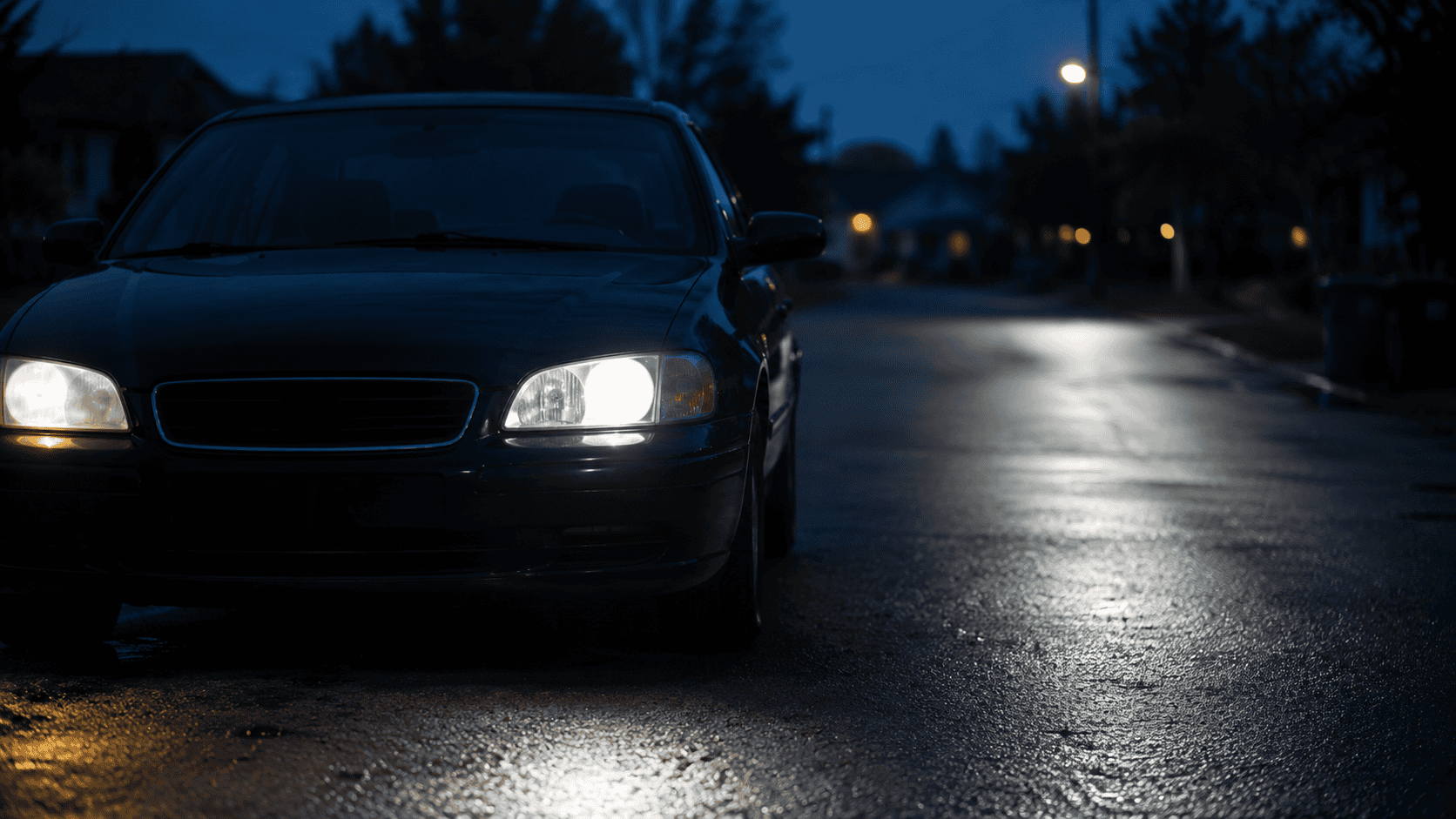
Try this tonight.
Park the car facing a wall or a garage door. Turn on the low beams. Walk around to the front and look at the light on the wall.
Really look.
If the car is more than five years old, what’s on the wall isn’t what those headlights used to produce. It’s a dim, yellowish echo of it. The kind of light that looks “fine” because we’ve been watching it fade for years.
Those cloudy headlights are part of why the road reads dimmer at night now. And dimmer light asks more of our eyes, so they may be part of why we get home more tired than the drive should leave us.
We haven’t noticed because we were never supposed to. The degradation is so gradual that our brain filtered it out the same way it filters out a slow-building car smell or a commute that quietly drains us. By the time the headlights are visibly yellow, the damage has been compounding for thousands of commutes.
And the damage isn’t just to the plastic. It’s to us.
The test
AAA tested this. They pulled the headlights off two popular sedans, each about eleven years old, and measured the light output against new ones. The testing followed the same federal standard the Department of Transportation uses.
The result: degraded headlights on low beam produced just 22 percent of the light that new headlights produce.
That’s not a subtle decline. That’s an 80 percent reduction.
To put that in terms a commute understands: as a rough illustration, if new headlights lit the road about 300 feet ahead, badly degraded ones might show us closer to 60 feet. At 45 miles per hour, we cover 66 feet per second. We’re outdriving our headlights, arriving at obstacles before the light does.
The math of a faded headlight
What 80% less light does to the road ahead
And this doesn’t happen at year eleven. AAA found that headlights can start showing signs of deterioration in as little as three to five years, depending on climate and sun exposure. If we park outside, if we live somewhere sunny, if we commute in a car we’ve owned since 2021, the decline is already underway.
What cloudy headlights do to our night vision
Headlights are made of polycarbonate plastic with a UV-resistant clear coat applied at the factory. Sunlight breaks down that coating over time. The plastic underneath oxidizes, turning yellow and cloudy. This is what mechanics and detailers call cloudy, foggy, or oxidized headlights: lenses that have lost clarity and produce significantly less light than they did when new. The process is identical to what happens to the inside of our windshield, the film we covered in the last article. Slow, invisible, and cumulative.
Half of all crashes happen at night. Even new headlights have significant shortcomings. Previous AAA research found that halogen headlights fail to safely illuminate unlit roadways at speeds as low as 40 mph. Even the most advanced headlights tested illuminated just 40 percent of the sight distance that full daylight provides.
Start with headlights that are already inadequate. Reduce their output by 80 percent. Drive home on an unlit road at 50 mph. The math doesn’t work. It hasn’t worked for years. We just didn’t see it, because the decline was too slow to see.
Why we never noticed
This is the part that connects every car commuting friction we’ve written about.
Psychologists call it change blindness. When a visual change happens gradually, slowly enough that no single moment triggers a “something’s different” signal, the brain doesn’t detect it. A landmark study by Daniel Simons found that when an object fades over the course of just twelve seconds, people fail to notice it significantly more often than when the same change happens abruptly.
If twelve seconds is enough to slip past the brain, imagine what happens over five years of nightly drives.
Every night, the light was a fraction dimmer than the night before. Every night, our eyes adjusted. Every night, our brain filed the headlights under “normal.” The yellowing crept in so slowly that by the time it was severe, we’d been compensating for it for years. Squinting a little harder. Leaning a little closer to the windshield. Processing the road with a little more effort.
We didn’t notice the headlights getting worse. We noticed ourselves getting more tired on the drive home.
It’s the same pattern behind the gas light gamble we play every week, the car smell we’ve gone nose-blind to, the road noise we’ve tuned out, and the windshield film that’s been quietly blinding us. Gradual change, invisible cost, brain picking up the tab.
The cost we don’t connect
When headlights produce less light, the brain compensates. It narrows focus. It works harder to pull detail out of shadow. It spends energy just trying to see what used to be obvious: the road edge, the shoulder, whether that shape ahead is a pedestrian or a mailbox.
The Insurance Institute for Highway Safety studied this. They found that vehicles with good-rated headlights have 19 percent fewer nighttime crashes than vehicles with poor-rated headlights. Driver-injury crashes drop by 29 percent. Pedestrian crashes drop by 23 percent. Headlight quality isn’t a cosmetic issue. It’s a safety variable hiding in the parking lot.
And the cognitive cost extends past the drive. A 2021 study on visual quality and driving found that when drivers operate with degraded visibility while managing other tasks, driving behavior deteriorates measurably. The effect compounds: poor visual conditions plus cognitive demand equals worse performance than either alone. The brain is working harder to see, which means it has less capacity for everything else. The driver compensating for dim headlights starts missing other things: the car braking two lanes over, the pedestrian stepping off the curb, the lane marker that disappeared in the rain.
By the time we pull into the driveway, we don’t think “the headlights were dim.” We think “I’m exhausted tonight.” The headlights never get credited. We blame the long day. We blame the traffic. We blame the week.
Sound familiar? It’s the same pattern. The small frustrations we’ve stopped noticing are quietly draining us. The headlights are one more invisible item on that list.
The fix that’s been sitting in the parking lot
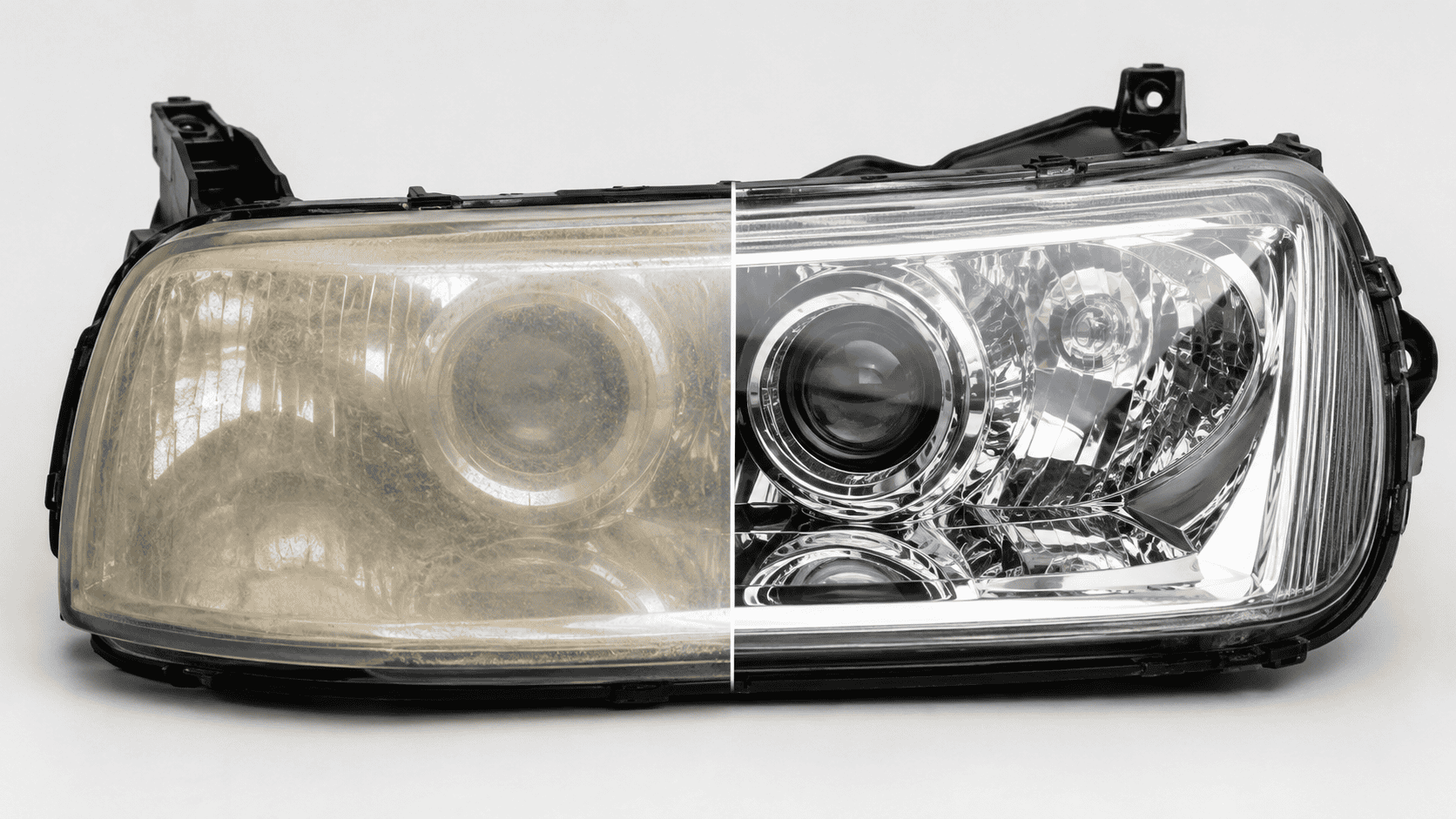
Walk to the front of the car tonight. Look at the lenses. If they’re yellow, hazy, or clouded, the fix is one of the simplest in the entire CarryCommute archive.
Our picks
Best overall
Sylvania Headlight Restoration Kit
The honest default. Surface activator, clarifying compound, and a UV clear coat. No power tools.
Best for most people who want a real fix in an afternoon.
Longest lasting
Cerakote Ceramic Headlight Kit
A little more effort up front for a ceramic seal that holds up far longer than a basic kit.
Best for anyone who would rather not redo this next year.
Quick improvement
Turtle Wax Speed Restorer
A ten-minute wipe. It won’t match a full sand-and-seal, but it clears enough haze to matter tonight.
Best for a quick cleanup before tonight’s drive, not a permanent fix.
Restore them. A headlight restoration kit takes about thirty minutes and costs less than a single tank of gas. AAA’s testing found that DIY restoration recovers roughly 70 percent of original light output. Not perfect, but a dramatic improvement over the 22 percent we’re currently getting. The kits work by sanding off the oxidized coating, polishing the bare plastic, and applying a fresh UV sealant. The Sylvania kit is the honest default: surface activator, clarifying compound, and a UV clear coat, no power tools required. The clarity it brings back is real, though as the next paragraph explains, it is not forever.
Or replace them. Aftermarket headlight assemblies restore more of the original output than a kit can, and OEM replacements restore essentially all of it, at a higher cost and effort. For most commuters, the restoration kit is the right first move.
Do it before winter. Shorter days, longer commutes, more time in the dark. The cognitive tax we’re paying on dim headlights doubles when we’re driving home at 5:30 PM in December instead of 7:30 PM in June.
Restoration isn’t permanent. The new coating degrades too, usually within twelve to twenty-four months. For commuters who would rather not redo it every year, a ceramic kit like Cerakote’s trades a bit more upfront effort for a seal that lasts longer. And for the nights when we only have ten minutes, a one-step wipe like Turtle Wax Speed won’t match a full sand-and-seal, but it clears enough haze to matter before the drive home. Either way, it remains one of the cheapest safety upgrades a commuter can make.
Total cost: less than a tank of gas. Total time: one Sunday afternoon. Total return: every night drive from now until the next time they fade, which, now that we know what to look for, we’ll actually notice.
Most people never do. They keep driving. They keep compensating. They keep arriving home drained and blaming the day.
Check the headlights tonight. If they’re yellow, fix them this weekend. The difference on the next night drive won’t be subtle, and that’s how we’ll know how long we’ve been compensating without realizing it.
Carry smarter. Commute better.
Common questions about cloudy headlights
Why are our headlights so dim at night?
Most often it is the lenses, not the bulbs. Polycarbonate headlight lenses cloud and yellow as their factory UV coating breaks down in sunlight, so an aging headlight can put out only a fraction of its original light. AAA testing found degraded low beams produced about 22 percent of the light new ones do.
How much light do cloudy headlights lose?
AAA laboratory testing found that degraded headlights produce just 22 percent of the light new headlights do, an 80 percent reduction. Signs of deterioration can begin in as little as three to five years depending on climate and sun exposure.
What causes cloudy or foggy headlights?
The clear coat applied at the factory breaks down under UV light, and the polycarbonate plastic underneath oxidizes, turning hazy and yellow. Parking outside and living somewhere sunny speeds the process up.
Do better headlights reduce crash rates?
Yes. An IIHS study found that vehicles with good-rated headlights have 19 percent fewer nighttime single-vehicle crashes, 29 percent fewer driver-injury crashes, and 23 percent fewer pedestrian crashes compared to vehicles with poor-rated headlights.
How much does headlight restoration cost?
A DIY headlight restoration kit is inexpensive and takes about 30 minutes, and AAA testing found it recovers approximately 70 percent of lost light output. Ceramic-coating kits cost more but last longer. Aftermarket replacement assemblies and professional restoration cost more again and restore more of the original output. For most commuters, the DIY kit is the right first move.
How do we know if our headlights are too dim?
Park facing a wall or garage door at night and turn on the low beams. If the light on the wall appears yellow, dim, or uneven, the lenses have degraded. Visible yellowing or cloudiness on the lens is a clear sign, and AAA recommends restoring or replacing them as soon as deterioration is visible.
How do we make cloudy headlights clear again?
The fix is to remove the oxidized top layer and reseal it. A restoration kit sands off the yellowed coating, polishes the bare polycarbonate, and applies a fresh UV sealant. AAA testing found this recovers roughly 70 percent of lost light output. The clarity is real but not permanent, since the new coating slowly degrades again.
How long does headlight restoration last?
Usually twelve to twenty-four months. The fresh sealant breaks down the same way the original factory coating did, so periodic restoration is normal. Ceramic-coating kits tend to last longer than basic ones.
Can we fix foggy headlights permanently?
Not with a standard kit. Restoration removes oxidation and adds a fresh seal, but that seal breaks down again over roughly twelve to twenty-four months. Ceramic-coating kits last longer, and replacing the headlight assembly is the only way to fully reset the lens. For most commuters, periodic restoration is the practical middle ground.
Does WD-40 remove headlight haze?
Only as a short-lived illusion. WD-40 leaves an oily film that temporarily fills micro-scratches and makes a lens look clearer for a day or two, but it does not remove oxidation, it attracts dust, and it wears off quickly. It is not a substitute for sanding and resealing the lens.
Will a magic eraser clean foggy headlights?
A magic eraser is melamine foam, a fine abrasive. It can scrub off some surface oxidation, but it also scratches the lens and strips whatever protective coating remains, which often makes the haze return faster. A restoration kit that finishes with a UV sealant is the safer approach.
Life on the go should be easier.
Get practical tips and occasional product picks to eliminate the small frustrations that drain you.
Keep reading
Car Commuting
The Sun Isn’t the Problem. The Way We’re Seeing It Is.
The film on our windshield, the worn wipers, and the visor gap turn ordinary sun into blinding glare.
Car Commuting
The Gas Light Gamble
Millions of drivers keep going after the fuel light comes on. The psychology behind the gamble and the rule that ends it.
Car Commuting
Your Car Smells and You’ve Gone Nose-Blind
Olfactory adaptation hides stale cabin air. Why nose-blindness happens and how to reset it.
Mind & Commute
Monday blues and the region beta paradox
Why we fix big problems and endure the small ones that drain us daily.