The Best E-Bike Lock: Why a $300 Lock Protects a $2,000 Commute
The best e-bike lock is a Sold Secure Diamond U-lock built to resist angle grinders. Our picks, what the ratings mean, and how to lock an e-bike in the city.

The best e-bike lock is a Sold Secure Diamond U-lock built to resist angle grinders. Our picks, what the ratings mean, and how to lock an e-bike in the city.

The work bag essentials worth carrying daily: power bank, leak-proof bottle and lunch container, a tech pouch and a personal kit pouch, plus how to keep the bag organized.
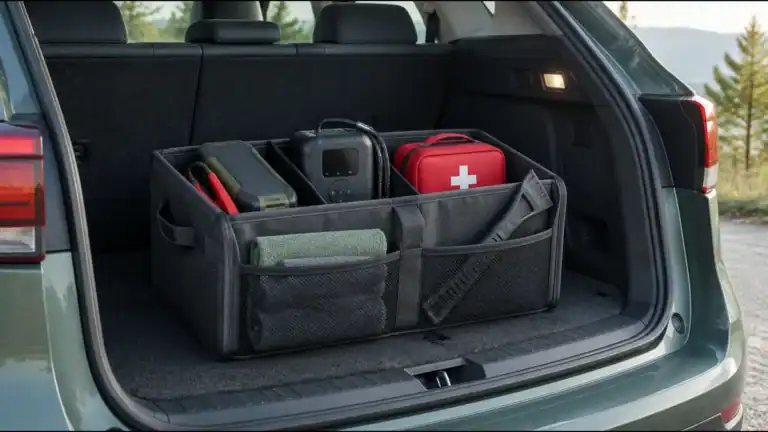
The car essentials worth keeping in every car: a jump starter, tire inflator, first aid kit, windshield tools, trunk organizer, charger and odor fix, and how to pack them.

The best water bottle for commuting has to pass four tests the trail bottle never faced: no leaking sideways in a bag, no sweating on a laptop, a base that fits a cup holder, and a weight we will carry every day. Picks by commute type.

Every kit produces the same before-and-after photo. We compared Cerakote, 3M, and Sylvania on the part that actually differs: the coating that decides whether the fix lasts a season or years.

The best commuter backpack is the one matched to the commute, not the one at the top of a ranking. Ten picks for bike, transit, office, laptop, gym, and budget, each with its honest weakness.

The best car odor eliminator is not a fragrance — almost every product in the car-care aisle is built to cover smell, not remove it. The four-step protocol, the products that actually work, and why vent clips are perfume on a bigger problem.

A car smell is a diagnostic signal. Each one points to something specific: a failing catalytic converter, bacteria on the AC coil, a clogged sunroof drain, a mouse in the blower motor. A research-backed guide to the 10 most common car smells, what they mean, and how to fix the source instead of masking it.

Decision fatigue statistics reveal a different story than most productivity advice. This research-backed guide analyzes 20+ peer-reviewed studies, debunks the widely cited 35,000 decisions per day myth, and highlights what decision fatigue research actually shows about habits, defaults, and cognitive performance.

When a US company switched 401(k) enrollment from opt-in to auto-enroll, participation jumped from 49% to 86%. The employees didn’t change. The form did. This is choice architecture: engineering an environment so the small decisions don’t need to be made at all. Apply it to the morning, and a difficult routine suddenly feels simple.