Car Commuting
The Best Car Odor Eliminator Is Not a Fragrance (Here’s What Actually Removes Smell from a Car)
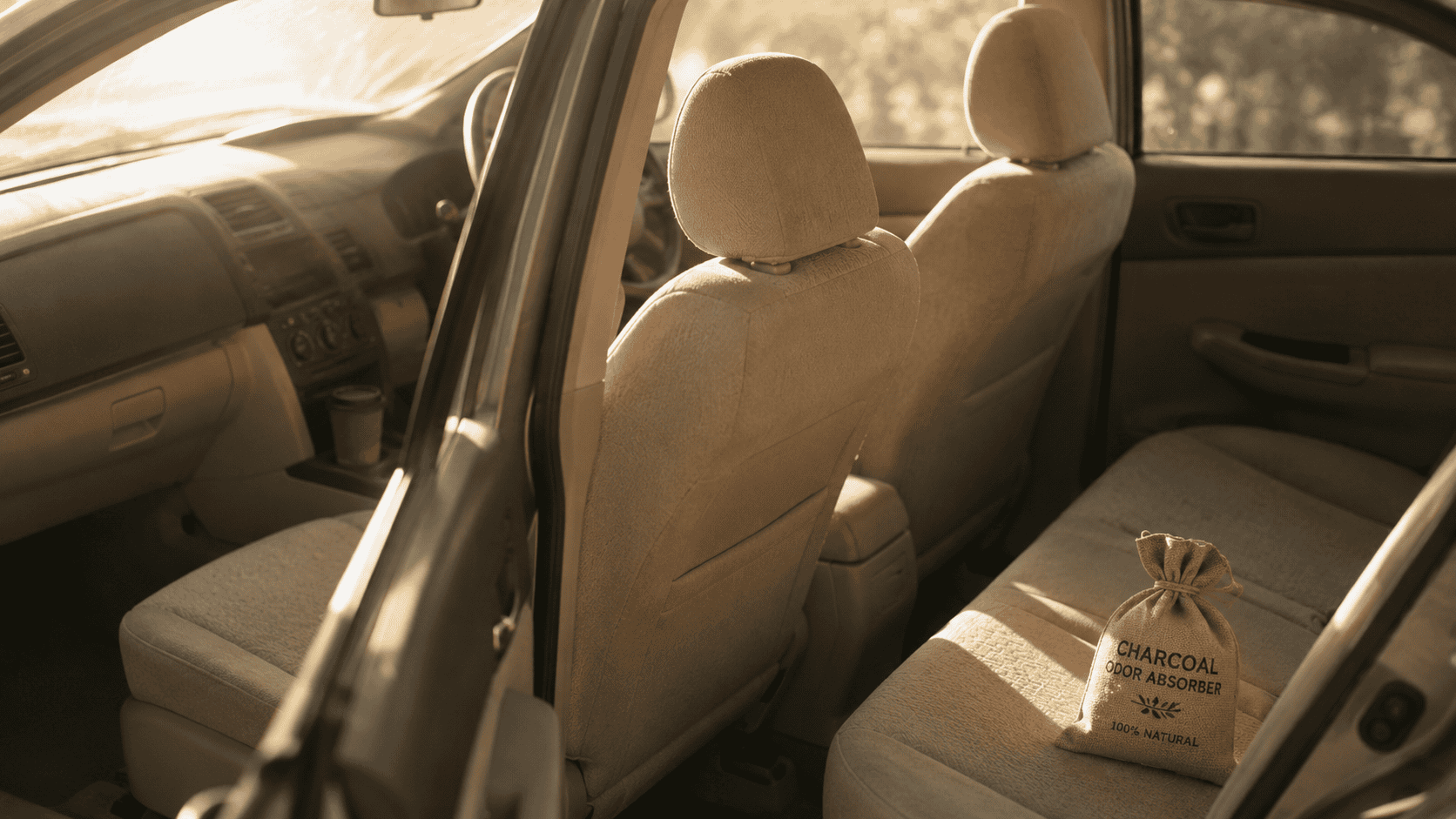
Affiliate disclosure: this article contains affiliate links to products. As an Amazon Associate, CarryCommute earns from qualifying purchases. We may earn a small commission if a reader buys through these links, at no extra cost. Every product was checked against current customer reviews and ingredient disclosures. No money or product samples were accepted in exchange for placement. Full disclosure policy →
“Why does my car smell?”
It hits one morning. We open the door, drop a bag on the passenger seat, and there it is. A little stale. A little off. Not bad enough to mention to anyone. Not gone after a week of leaving the windows down.
So we do what everyone does. Grab a vent clip at the gas station. Two days of fake pine. Then back to the same smell, only now with fake pine layered on top.
Then a hanging tree. Then a spray. Then those little coffee bean pouches from Instagram.
Nothing works.
The reason nothing works is that almost every product marketed as a car odor eliminator, and almost every “best car air freshener” listicle, recommends products built to cover smell, not remove it. We’ve been buying perfume for a problem that needs cleaning. The actual fix, it turns out, is cheaper, simpler, and almost no one talks about it.
Quick start
If we only do three things
For the impatient. The full protocol is below; this is the short version.
| If the car smells like ___ | The fix | What to grab |
|---|---|---|
| Stale, even with windows down | Swap the cabin filter | Bosch HEPA 6055C, ten minutes See the filter pick View on Amazon |
| Musty when AC turns on | Foaming AC coil cleaner | Nu-Calgon or Lubegard 2-Pack See coil cleaner picks View on Amazon |
| Lingering, hard to place | Charcoal bag in the back | Moso 300g linen bag, lasts two years See the charcoal pick View on Amazon |
And the part that’s wild: we walk past the right products in the auto-care aisle every time, while reaching for the wrong ones. Mild and chronic problems rarely get fixed. It’s the region beta paradox applied to the inside of a car: bad enough to drain us, not bad enough to make us act.
The one-line theory of every product on this page: different smells need different chemistry. A vent clip is perfume. An enzyme cleaner is digestion. Activated charcoal is trapping. Ozone is oxidation. Match the smell to the chemistry that addresses it, and the products become obvious.
A vent clip is perfume. An enzyme cleaner is digestion. Activated charcoal is trapping. Ozone is oxidation.
Why our cars smell in the first place
It’s not one thing. It’s never one thing.
A coffee spill on the way to work. A wet jacket on Wednesday. A gym bag in the back. Takeout from Thursday lunch. The AC running every morning, condensing water on the evaporator coil. Recirculate mode. A cabin filter we’ve never changed in 18 months. Nothing big. Nothing dramatic. Just a slow accumulation we don’t notice until we suddenly do.
And the shorter the daily commute, the faster all of this builds up. The AC coil never has time to fully dry between trips, so mold and biofilm grow overnight. School runs and 15-minute drives compound much faster than 45-minute highway commutes do. The price of a short commute is a wetter coil.
And by then it’s months in. (It’s the same pattern as the windshield haze that gets worse with time or headlights that dim a little every year: slow, invisible until it isn’t.)
How a car cabin quietly turns
The slow loop most of us don’t see
No single thing caused it. All of them did.
The fix is not one product. It is a small protocol: change the cabin air filter, clean the AC evaporator coil, treat any biological spills with an enzyme cleaner, and place an activated charcoal bag for ongoing maintenance. Most cars need only two or three of these steps. The current price for each product sits on its Amazon listing, since it changes often. The whole job is a Saturday afternoon’s work.
Once the cause is clear, the products in the aisle start to look different. A vent clip can’t undo any of this. A spray can’t either. They cover the result for a few days. The cause is still happening every morning.
What actually works is matching the smell to the right kind of fix. Different smells come from different places. Different places need different tools.
First: figure out which smell we’re dealing with
This is the part most articles skip. They list 10 products and tell readers to try them all. But the smell itself tells us which fix to grab first. There is no single best car odor eliminator that works on every smell. Different smells come from different sources, and the fix has to match the source. Read the box below. The row that matches points to the right tool.
If the car smells like ___
Match the smell, save the money
Tap a row to jump to the fix.
Reading top to bottom: the first three are the high-frequency ones. The middle two are the cases people underestimate (food spills are biological, not just messy; new car smell is real chemicals, not “freshness”). The last is the catch-all for when the smell is hard to name.
The picks below match this list. Cheapest fix first, harder fixes after.
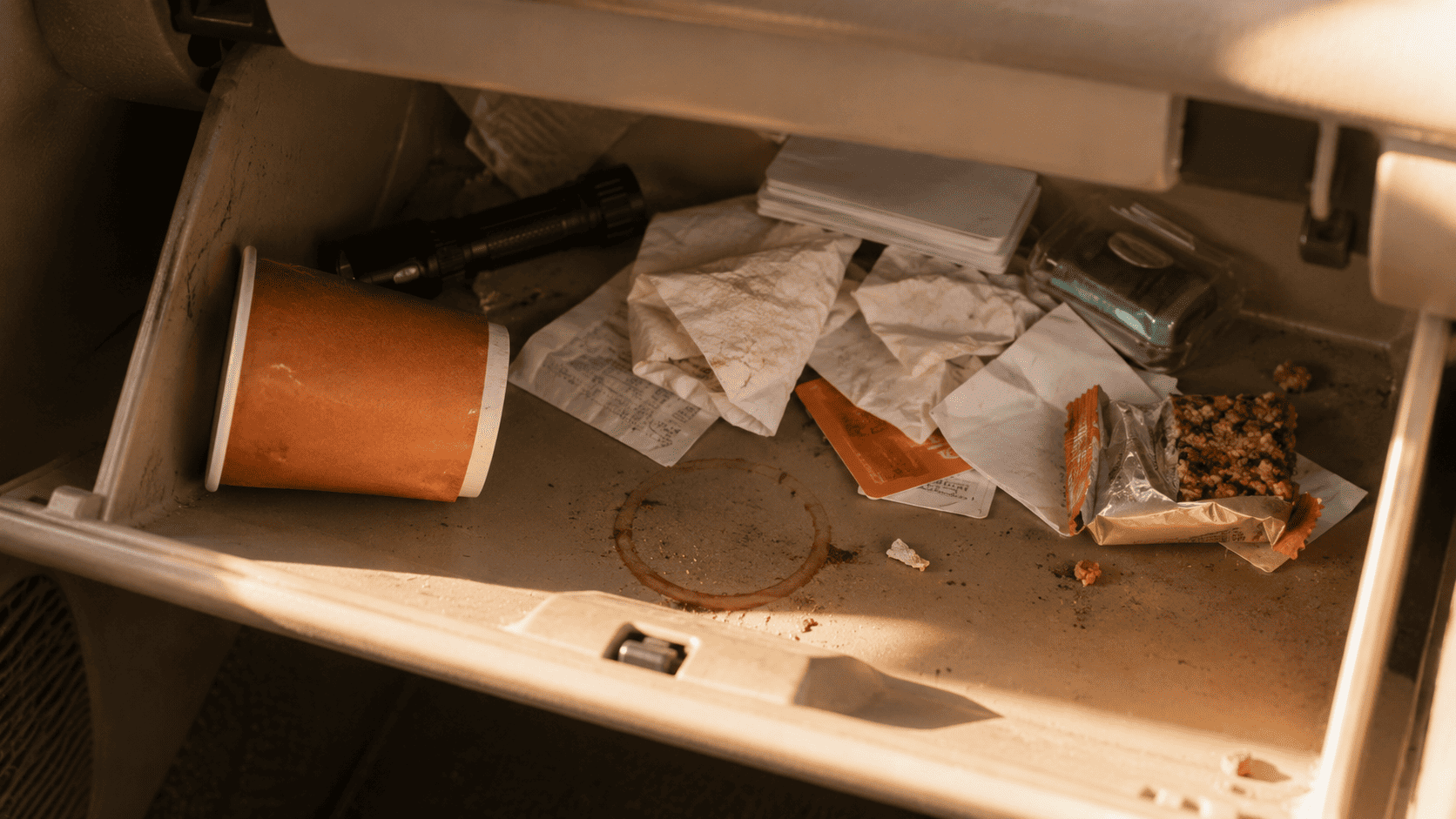
Step 1: change the cabin air filter
This is the cheapest, fastest, most underrated fix in the entire car. The cabin filter is the lungs of the car. It sits between outside air and the cabin, and it traps everything we drive through. Most owners have never replaced it. Some have driven the same one for 60,000 miles.
If a car smells stale and the cause isn’t obvious, this is almost certainly part of the problem. A budget-tier filter and 10 minutes behind the glove box. The difference is noticeable the same day.
What we want is a filter with two layers: a particulate layer (catches dust, pollen, soot) and an activated carbon layer (catches gases and odors). Most factory filters are particulate-only. The replacements below add carbon. One is also HEPA-rated.
The pick
Bosch HEPA Premium 6055C
For Toyota Camry, Corolla, Highlander, RAV4, 4Runner, Sienna; Lexus ES, GX, IS, RX; Subaru Outback
The only major brand that publishes its HEPA test standard on the manufacturer site. Bosch documents ISO 29463-3:2011 testing for the entire HEPA cabin filter line, with 99.97% filtration at 0.3 microns. Most “HEPA” labels are marketing language. This one is actually tested.
One thing to know: the higher filtration means slightly more airflow resistance. On older cars with weaker blower motors, defrost output in winter is a touch less powerful. Worth it for the air quality, but worth knowing.
Buy it
Bosch HEPA 6055C Cabin Air Filter
Premium pick · OE-supplier brand · widely available
Installs in 5-15 minutes behind the glove box. Squeeze the sides inward, drop the box forward, swap the filter, push back. Done.
View on Amazon →Tier 2 · Community-sourced
For European cars (VW, Audi, Porsche): Mann-Filter CUK 26 009, the OE supplier. Look up the right CUK number for the specific vehicle. View on Amazon →
For older Toyotas (2002-2010 Camry, Sienna, ES330): FRAM Fresh Breeze CF10132, carbon plus baking soda. Solid for everyday use; pros prefer Bosch where the fitment exists. View on Amazon →
Step 2: clean the AC coil (if it smells musty)
If the smell hits hardest the moment we turn the AC on, this is the fix. That musty, vinegar, “wet socks” smell coming through the vents is mold growing on the evaporator coil inside the dashboard. The coil is wet every time the AC runs. Wet, dark, and warm: a perfect home for mold.
The fix is a foaming alkaline cleaner that sprays into the coil area, expands, dissolves the mold, and drains out the AC drain tube under the car. A budget-tier to mid-range product and twenty minutes. Most people have never heard of it.
Two products do this job equally well. They use essentially the same chemistry: foaming alkaline detergents with surfactants. The choice between them is about packaging, not performance.
The value pick
Nu-Calgon 4171-75 Evap Foam Cleaner
The HVAC industry’s default coil cleaner
Marketed for residential and commercial AC, not cars, but the chemistry is identical to the automotive-branded equivalents. It is one of the most widely used listings in the entire evaporator-cleaner space, and the HVAC professional’s standard pick.
One thing to know: the formula is alkaline (2-Butoxyethanol, Cal Prop 65 listed). Wear gloves. Ventilate the cabin during application. The chemistry isn’t more dangerous than the automotive-marketed version, but the listing is more upfront about what’s in the can.
Buy it
Nu-Calgon 4171-75 Evap Foam
Value pick · HVAC industry default · widely available
Spray into the cabin filter housing with the AC running on max cold and recirculate. The fan pulls foam through the coil. Let it drain for 15 minutes. Replace the cabin filter (don’t reuse the old one).
View on Amazon →Tier 2 · Community-sourced
The automotive-branded pick
Lubegard Kool-It Evaporator Foam Cleaner (2-Pack)
The detailer-community default for car AC
Marketed specifically for automotive systems, with antimicrobial chemistry positioned for cabin use. Comes with an applicator hose designed for the AC drain tube method (more on that in a moment). Two cans in the pack, useful since the most common defect is foam-delivery failure on a single unit.
What the automotive version adds: the included applicator hose, automotive-specific marketing, and the convenience of a 2-pack with built-in redundancy. The chemistry isn’t meaningfully different from Nu-Calgon. With a flexible applicator hose already on hand, the case for it is mostly the convenience.
Buy it
Lubegard Kool-It (2-Pack)
Automotive-marketed · includes applicator hose · 2-pack format
Same application as Nu-Calgon. The included applicator hose is what makes the AC-drain-tube method (below) easier: that’s the convenience it buys.
View on Amazon →Tier 2 · Community-sourced
Pro tip
The trick the pros use that the can never mentions
Spraying through the cabin filter housing only reaches part of the coil. The detailer trick: find the AC drain tube under the car (a small rubber tube, usually behind the firewall on the passenger side). Detach it, push the included applicator hose up into it, seal around it with duct tape, and empty the can that way. The foam reaches the entire coil and drains right back down the same tube.
The first time most people do this, the runoff is brown. Or black. That’s months of biofilm coming out.
Step 3: enzyme cleaner on the spills
This is the one for pet urine, vomit, spilled milk, dropped food, blood. Anything organic that soaked into upholstery or carpet padding.
An enzyme cleaner is not a normal spray. It contains live bacteria that, when they hit organic residue, produce enzymes that literally digest the residue. Slower than other products. Dramatically more effective on biological spills. The bacteria eat until the food is gone, and then there’s nothing left to smell.
Two things to know before buying. First, not every “odor eliminator” is actually an enzyme cleaner. Some popular ones are citrus-oil based, or quaternary ammonium disinfectants, or just plant-extract sprays. We want one with live bacteria on the ingredient list. Second, application matters more than the product. Most enzyme cleaners “fail” because people sprayed a light mist on the surface and called it done. Below is what actually works.
The pick
Rocco & Roxie Stain & Odor Eliminator (32 oz)
For pet urine, vomit, dropped food, milk, blood, the things surface cleaning never gets out
The pet-owner consensus pick. Carries the Carpet & Rug Institute Seal of Approval, an independent verification that the formula performs as cleaner without damaging carpet, the strongest third-party credentialing in this product category. Most cited as “the only thing that worked” by people who tried other products first.
What it does well: fresh accidents (within hours to a few days) usually clear in one application. What it doesn’t do: set-in stains months old often need 2-3 applications, full saturation each time, with 12-24 hour dwell time between. For years-old contamination soaked into seat foam, no spray fixes it; that needs the foam replaced.
Buy it
Rocco & Roxie 32 oz Original
Premium pick · CRI Seal of Approval · pet-owner consensus
Saturate the spot. Don’t mist. The bacteria need to reach where the residue is. Cover loosely with plastic wrap or a damp towel for 12-24 hours so the surface stays wet. Don’t combine with vinegar, peroxide, or bleach (kills the bacteria). Don’t use heat or steam after (denatures the enzymes).
View on Amazon →Tier 2 · Community-sourced
Budget alternative: Nature’s Miracle “Everyday Mess” 32 oz. The honest middle option. Important: there are 8+ Nature’s Miracle variants (“Advanced,” “Severe Mess,” “Just for Cats” etc.) at different formulations. The article wants the original “Everyday Mess.” View on Amazon →
Step 4: a charcoal bag in the back
This one is for after the cleaning is done. Activated bamboo charcoal is the most underrated tool in the whole category. No fragrance. No aerosol. No chemicals. Just a small linen bag that absorbs odor molecules out of the air through tiny pores in the charcoal.
It won’t rescue a contaminated car. But once the cabin is genuinely clean, a charcoal bag in the back keeps it that way for about two years, if it gets a couple of hours in direct outdoor sunlight once a month. (Sunlight releases the trapped molecules and refreshes the charcoal. Window glass blocks UV, so the recharge has to happen outside.)
This is the natural option. For households that don’t want any added smell. Safe for kids, pets, fragrance-sensitive households, and anyone with allergies.
The pick
Moso Natural Charcoal Bag for Cars (300g)
For ongoing maintenance after cleaning, light odors, fragrance-free preference
The cleanest product listing in the entire category. Explicit about what it is (activated bamboo charcoal, no chemicals). Explicit about how to use it (recharge in sunlight monthly). Explicit about how long it lasts (two years). HGTV Editors’ Pick. Linen pouch, hangable, looks fine in the back of any car.
What it does: light staleness, residual smoke, mild musty, “I don’t know why my car still smells slightly off after cleaning.” What it doesn’t do: heavy cigarette saturation in a smoker’s car, established cat urine, deep mildew. It’s maintenance, not rescue. Use it after the other steps, not instead of them.
Buy it
Moso Natural 300g Car Bag (Linen)
Premium pick · HGTV Editors’ Pick · linen bag
Hang it in the back. Once a month, leave it in direct outdoor sunlight for a couple of hours (not through a window, sunlight has to hit it directly). Lasts about two years before the charcoal needs to be composted and a new bag bought.
View on Amazon →Tier 2 · Community-sourced
Hidden behind-headrest version: Purggo. Same activated bamboo charcoal, mounts behind the front seat where it’s invisible. Pay for the form factor. (Note: the listing forgets to mention monthly sunlight recharging, set a reminder.) View on Amazon →
Budget multipack: CLEVAST 4 × 200g. Best volume option in the category. Spread one bag in the car, one in a closet, one in a basement, one in a gym bag. View on Amazon →
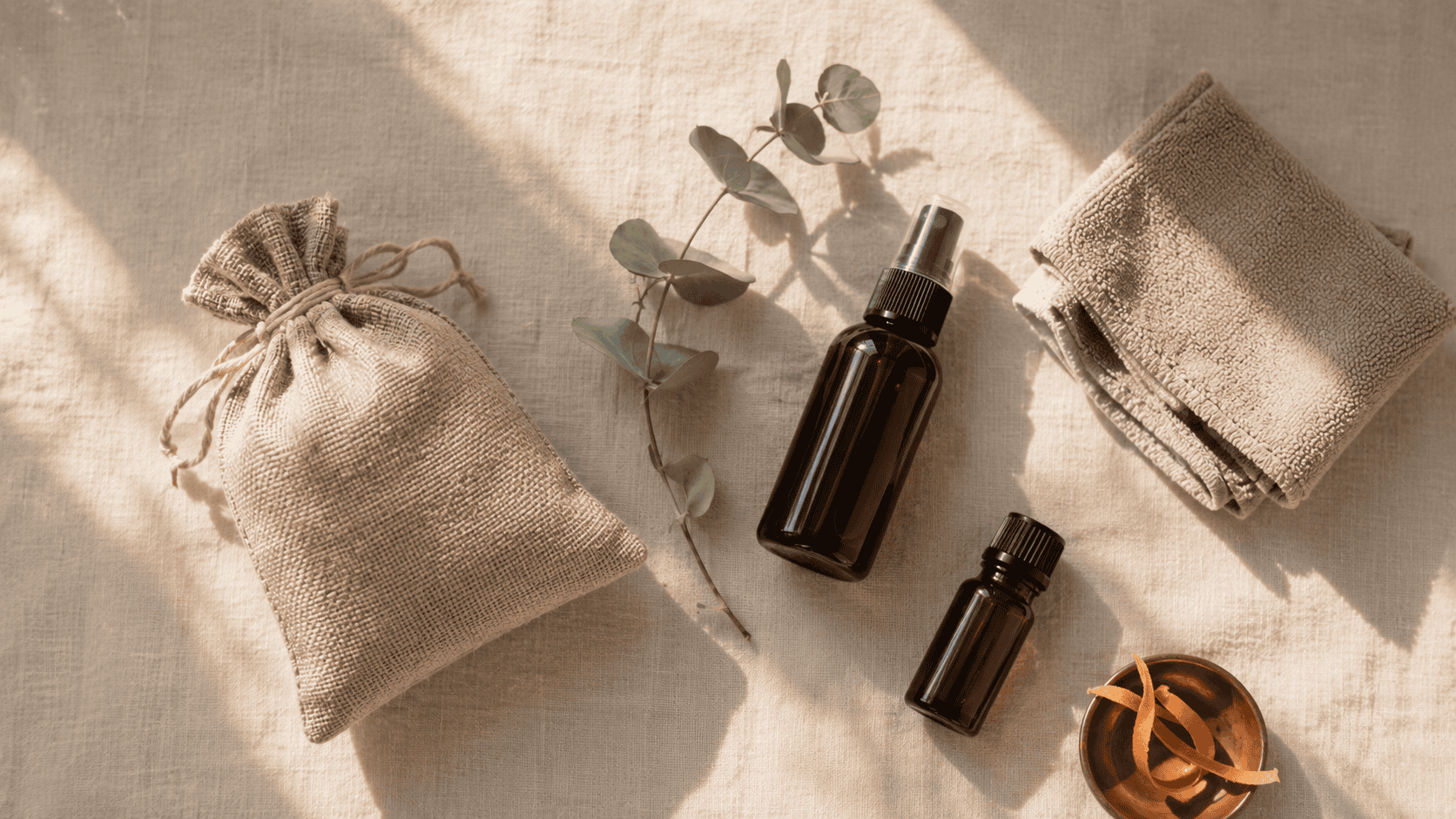
The truth about new car smell
Worth a quick detour, because this one comes up a lot, and the conventional take on it is mostly wrong.
“New car smell” is not freshness. It’s chemistry. Specifically, it’s the volatile organic compounds (VOCs) released from plastics, glues, sealants, and upholstery treatments as they slowly cure during the first six to twelve months a car exists. Manufacturers don’t add it. They can’t fully prevent it. The EPA classifies indoor VOC exposure as a long-term air-quality concern. So the smell of a brand-new car is, technically, a pollutant we’re sitting inside.
For most adults this is a non-issue. For new parents driving infants home from the hospital, for asthma sufferers, and for new EV owners (whose sealed cabins off-gas faster initially), it can be a real one. The fix is not a spray. The fix is the same boring three-part move: ventilate aggressively (windows down whenever weather permits), upgrade to a HEPA cabin filter with activated carbon (Step 1, above), and place an activated charcoal bag in the back (Step 4, above). Time does the rest. By month twelve, most of the off-gassing is over.
What never to buy: a “new car smell” spray. Those products literally reproduce the VOC bouquet the cabin is trying to escape. The mini-section above covers the basics; the rest is patience and ventilation.
Smoke, cigarette, and weed odor: the real method
If our car smells like cigarettes or weed, this is the section we want. And the first thing worth knowing is that the answer is not a single product. Smoke removal is a sequence, and the order matters more than any one step.
Here is why smoke is hard. Nicotine and tar are oily, sticky compounds that don’t float away. They settle into every surface they touch: fabric seats, carpet fibers, the foam under the upholstery, door panels, the headliner, and the ventilation system. Baking soda and charcoal can absorb some of the airborne part, but they cannot pull nicotine residue out of foam cushions or clean the inside of the air ducts. That is why the absorb-and-mask approach never quite works on smoke. The residue is physical, and it has to be physically removed.
The sequence that actually works, in order:
1. Clean every surface. This is the step that does most of the work, and the one people skip. Wipe down every hard surface (dash, console, trim, doors) to lift the tar film. Vacuum and then deep-clean the carpets and seats. An enzyme cleaner helps here because it chemically breaks down the odor-causing residue instead of covering it, and it needs dwell time to work. For the fabric and upholstery, hot-water extraction makes the real difference: a portable extractor sprays heated cleaning solution into the fibers and immediately suctions it back out, pulling embedded smoke residue with it. This is what detailers use, and it reaches what wiping and spraying can’t.
The extractor pick
Bissell Little Green Mini Portable Carpet and Upholstery Cleaner
The one bigger-ticket item on this page, and the only machine
Bissell markets this exact model as a car and auto detailer, and it is one of the most popular portable extractors in its category for a reason: it sprays heated solution and suctions it back out, which is the mechanism that actually pulls smoke residue out of seat fabric and carpet rather than pushing it deeper. Deep base of owner reports, simple to run, light enough to carry to the car.
One honest caveat: the most common long-term complaint is a hose that can crack near the handle over time. Store it carefully and don’t yank the hose. If you only need this once, renting an extractor from a hardware store or paying a detailer for a single session is a reasonable alternative to buying.
Buy it
Bissell Little Green Mini (4075)
The one machine purchase · marketed as a car/auto detailer · widely owned
This is the only item in the smoke protocol that is a bigger-ticket purchase rather than a consumable. Worth it if smoke is a recurring problem or you bought a used car from a smoker. For a one-time job, rent or use a detailer instead. The current price is on the Amazon listing, since it changes often.
View on Amazon →Tier 3 · Spec-compared
2. Handle the ventilation system. This is not optional with smoke. Replace the cabin air filter, because the old one is saturated and will recirculate smoke the moment the fan turns on. Run a coil cleaner through the AC system so the evaporator and ducts aren’t holding residue. Skip this and the smell comes back the first warm day.
3. Then, if it’s a heavy case, ozone. For a car that was smoked in regularly for years, cleaning and ventilation get most of the way but not all the way, because some residue is embedded deeper than extraction reaches. That is what ozone is for. It is a finishing step, not a first step, and not every car needs it.
That last point is the one most product pages get wrong. For light or occasional smoke exposure, a thorough clean plus a new cabin filter is usually enough on its own. Ozone is what makes the difference for heavy, long-term saturation. Running ozone on a car you haven’t cleaned first mostly wastes the treatment, because the residue is still sitting there generating smell.
A quick note on what we left out. Professional detailers and restoration crews sometimes use thermal fogging, where a deodorizer is heated into a fog that travels the same paths the smoke did. It works, but it bonds with and blends odor more than it removes the source, so it is a complement to cleaning rather than a replacement for it, and it is more of a shop tool than a consumer one. We mention it so the picture is complete, not because most of us need it.
On ozone itself, the honesty matters because it is the one step on this page with a real safety asterisk. Ozone is a strong oxidizer; it breaks odor molecules apart at the chemical level, including the embedded smoke and tar. It is also toxic to humans and pets above 0.1 ppm. The car has to be unoccupied during treatment. Air it out 30 minutes minimum before getting back in. And ozone slowly degrades rubber seals and leather over many sessions, so detailers cap usage at one or two sessions per car per year. Used correctly, once, after a deep clean, it is the thing that finally clears heavy smoke. Used casually and repeatedly, it damages the car. Both of those are true.
The pick
Airthereal MA10K-PRO Ozone Generator
For smoke, cigarette, weed, mold, and used-car reset, once-a-year use only
The simplest, most reliable consumer ozone unit. Mechanical timer (more reliable than digital), clear safety warnings on the listing, EPA Establishment Number disclosed. Detailer-community pick in this product class.
How to actually run it: remove all people, pets, and plants from the car. Place the unit on the back floor or seat. Set the timer for 1-2 hours (3 max for severe cases). Close the doors and walk away. When it stops, open every door, run the AC on max for 15 minutes, and stay out for 30 minutes minimum. Two hours is better. The “clean” smell is real.
Buy it
Airthereal MA10K-PRO (Mechanical Timer)
Premium pick · mechanical timer · EPA Establishment Number disclosed
For one-time deep treatment of severely contaminated cars (used-car smoke remediation, mold after water damage, post-rodent cleanup). Not for routine use. The mechanical timer model is the right version: simpler and more reliable than the digital or WiFi versions on the same listing.
View on Amazon →Tier 2 · Community-sourced
Cheaper option: Enerzen O-888. Works similarly. About a quarter of buyers report durability issues (units failing within months). That is the trade-off at the lower end. View on Amazon →
What’s the best car odor eliminator? (the honest version)
Honest answer: after the cleaning is done, the car smells like nothing in particular. Which is, arguably, the actual goal. The best car odor eliminator for most people is the protocol above, not a product on a shelf: the cabin filter and the charcoal bag did the work, and the air is genuinely clean. The “fresh” smell new cars have at the dealership is new-car off-gassing, which the EPA considers an air-quality issue, not a feature.
That said, plenty of people still want a pleasant scent. Once the cabin is genuinely clean, that’s just preference, and the article isn’t going to lecture anyone out of it.
The honest version is a refillable essential oil diffuser. A small clip with a felt or wood pad that takes a few drops of essential oil. The driver controls exactly what enters the cabin air. No mystery fragrance blend, no proprietary cartridge, no leaking gel. Refills cost a fraction of replacement vent clips. Eucalyptus, peppermint, and cedarwood are widely tolerated. Lavender is polarizing but well-loved by some.
And if a diffuser feels like one more thing to maintain: a clean car with a fresh cabin filter and a charcoal bag smells like nothing. That’s not a problem. That’s the win.
What to stop buying
None of these are scams exactly. They just don’t do what most buyers think they do. Most of us have bought one of them. Knowing what’s in this list saves a recurring drip of money spent on the wrong category every year.
Skip these, they don’t actually fix the problem
Vent clip diffusers
Pure fragrance. They add a smell on top of the original smell, then both fade together. The original problem is still there, only now with three days of fake pine layered on it.
Hanging cardboard tree fresheners
Same as vent clips, cheaper. Worth knowing: the strongest scents in this category are what dealers hang in used cars to mask smoke and water damage. Buying one is using the dealer’s trick on ourselves.
Coffee bean fresheners
A regular bag of dark roast in a decorative pouch, sold at a steep markup. A bag of coffee beans plus a mesh sock from a sock drawer does the same thing for far less.
“New car smell” sprays
Reproduce the off-gassing chemical bouquet (VOCs, plasticizers, glue solvents) that the rest of this article addresses how to avoid.
Cheap generic ozone generators
A category of generic units claiming 65,000-90,000 mg/h output well below the cost of established brands. The output claims are inflated (physics: capacity scales with plate size, voltage, and airflow, none of which scale down with cost). Safety mechanisms also don’t scale down. Skip the category entirely.
12V plug-in “ionizers” or “cold plasma” car deodorizers
Different mechanism category. Produce small amounts of ozone as a byproduct without proper safety controls. The plug-in form factor implies “leave it on always,” which is the wrong assumption for anything ozone-producing.
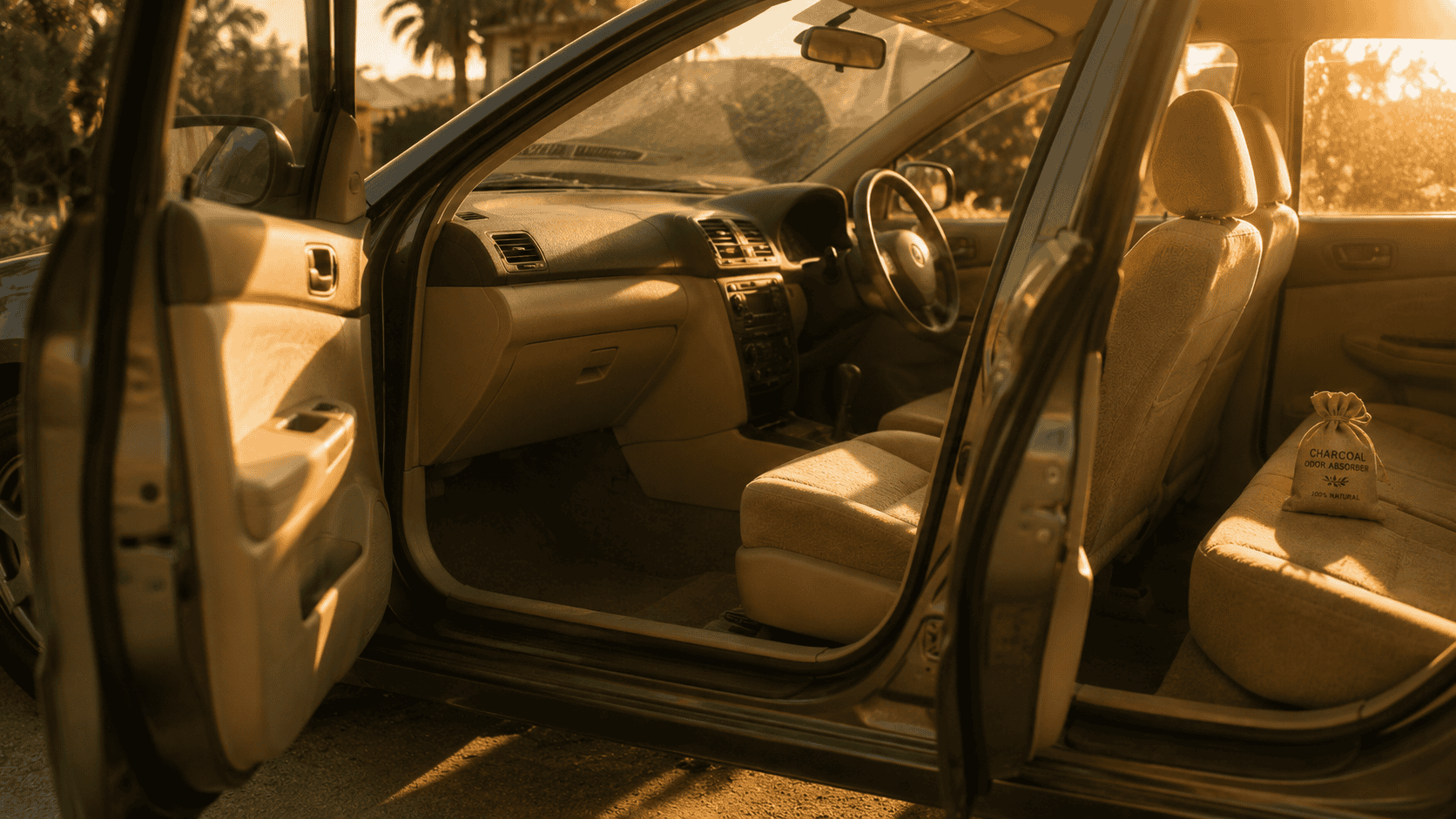
Stop perfuming the landfill
Here is the test. Tomorrow morning, when we open the car door, just pay attention. Stale? Musty? Sharp? Vague?
Just notice.
Most of us will spot it inside three seconds. The smell that’s been there for months, that had stopped registering, that we’d been slowly covering with whatever was at the gas station counter. There it is.
Then we fix the right thing. Filter. Coil. Enzyme. Charcoal. A Saturday afternoon and the cost of a few parts, with the current price on each Amazon listing. If a specific smell is throwing things off, the diagnostic is one click away. If the morning rush is the bigger problem, that’s a different article. The drag of a stale car is just one of the small things adding up before nine.
The car-care aisle will keep selling us a “car odor eliminator” that, in most aisles, just means perfume in a fancier bottle. We don’t have to keep buying it.
Stop perfuming the landfill. Carry cleaner.
Common questions
This article is general consumer information, not medical or veterinary advice. For health questions about VOC exposure, asthma, infants, or pet sensitivities, consult a qualified medical or veterinary professional.
What is the best way to remove smell from a car? There is no single best product. The right approach depends on the smell. For musty AC smell, a foaming evaporator coil cleaner works in 20 minutes. For pet urine, vomit, or food spills, a bio-enzymatic cleaner with full saturation and a 12 to 24 hour dwell time. For general staleness, a fresh cabin air filter and an activated charcoal bag in the back. For severe smoke saturation, the full protocol plus a one-time ozone treatment. Match the smell to the mechanism that addresses it, and the products become obvious.
How do I make my car smell good naturally? Source removal first, then activated bamboo charcoal for ongoing maintenance. Charcoal absorbs odors physically without adding fragrance, which is why fragrance-sensitive people prefer it. After the cabin is genuinely clean, a charcoal bag in the back keeps it fresh for about two years if you place it in direct outdoor sunlight once a month. For a pleasant scent on top, use a refillable essential oil vent diffuser with eucalyptus, peppermint, or cedarwood.
What air freshener actually removes odor? None of the products marketed as air fresheners actually remove odor. Vent clips, hanging cardboard trees, and most sprays release fragrance to mask existing smells. The categories that genuinely remove odor are activated bamboo charcoal (absorbs through adsorption), bio-enzymatic cleaners (digest organic residue), foaming evaporator coil cleaners (kill mold inside the AC system), and ozone generators (oxidize molecules apart). The best natural car air freshener is a charcoal bag, which physically traps molecules instead of covering them with fragrance.
Do charcoal bags actually work in cars? Yes, for maintenance. Activated bamboo charcoal traps odor molecules through a physical mechanism called adsorption: the porous carbon catches molecules on its surface. It works well on light, ongoing odors after the source is gone. It does not rescue a heavily contaminated car. The catch is that charcoal needs to be placed in direct outdoor sunlight monthly to release trapped molecules. Window glass blocks UV, so the recharge has to happen outdoors. Most reviews that say charcoal stopped working forgot to recharge it.
Does baking soda absorb car smells? Baking soda works on damp acidic spots through direct chemistry, so sprinkling it on a urine spot or vomit residue and vacuuming up does help. It does not do much for airborne odor across a whole cabin because the surface area is too small relative to the air it would need to absorb from. Useful as a spot-treatment for a fresh spill, not as a replacement for activated charcoal in a moving car.
How long does new car smell last? Six to twelve months for the strongest off-gassing, with traces continuing for two to three years. New car smell is not freshness, it is volatile organic compounds (VOCs) released from plastics, glues, sealants, and upholstery treatments as they cure. The EPA classifies indoor VOCs as a long-term air quality concern. To reduce off-gassing faster, ventilate the cabin (windows down whenever possible), upgrade to a HEPA cabin filter with activated carbon, and keep an activated charcoal bag in the back. For new EV and hybrid owners, this matters more because cabins are sealed tighter and off-gas faster initially.
How do you get cigarette smoke smell out of a car? Smoke removal is a sequence, not a single product. First clean every surface to lift the tar film: wipe hard surfaces, deep-clean carpets and seats with an enzyme cleaner, and use hot-water extraction on the upholstery. Second, replace the cabin air filter and run a coil cleaner through the AC, since the ventilation system holds smoke and will recirculate it. For light or occasional smoke, this is usually enough. For heavy, long-term saturation, add a single ozone treatment in the unoccupied car after cleaning, since ozone reaches embedded residue that extraction cannot. Air out 30 minutes minimum afterward. If smoke smell returns within a week, the headliner is still saturated and a professional detailer is the next step.
Are car ozone treatments safe? Ozone works, and it is also toxic to humans and pets above 0.1 ppm. Manufacturer instructions are unambiguous: unoccupied car only, 30-minute air-out before getting back in. Detailers cap usage at one or two sessions per car per year because extended ozone exposure can degrade rubber seals, leather, and some plastics. Use ozone once on a problem car (severe smoke, mold, rodent decay), not as a regular tool.
How often should I change my car’s cabin air filter? Every 15,000 to 30,000 miles, or once a year for stop-and-go commuters. Most owners have never changed theirs. It is an inexpensive swap that takes 5 to 15 minutes and addresses recirculated odor that no spray can reach. If your car still smells after cleaning, the cabin filter is almost certainly part of the problem.
Why does my car AC smell like vinegar or wet socks? That smell is biofilm growing on the evaporator coil inside the dashboard. The coil is wet every time the AC runs, and wet plus dark plus warm equals a perfect home for mold and bacteria. A foaming evaporator coil cleaner sprayed through the cabin filter housing or the AC drain tube clears it in one application. Most musty AC smells fix themselves with a budget-tier can and twenty minutes.
What’s the best enzyme cleaner for pet urine in a car? A bio-enzymatic cleaner with full saturation and a 12 to 24 hour dwell time. Spray a light surface mist and almost nothing happens because urine soaked into the carpet padding underneath, and the bacteria need to reach where the residue is. Saturate the area until the cleaner penetrates as deep as the original liquid did, cover with plastic wrap or a damp towel for 12 to 24 hours, and do not combine with vinegar, peroxide, or bleach (they kill the bacteria). Look for a product carrying the Carpet & Rug Institute Seal of Approval, which is independent verification the formula performs as cleaner without damaging carpet.
Is it safe to use these products around kids? The four-step protocol (filter, coil, enzyme, charcoal) is fine to use with kids in the car afterward. The enzyme and coil cleaners need to dry before kids get back in (a few hours). The ozone generator is the one exception: nobody, kids or adults, in the car during treatment, and air it out 30 minutes minimum before re-entering.
What’s the cheapest way to make a really bad-smelling car okay? A cabin filter (Bosch HEPA), the Nu-Calgon evaporator foam, Nature’s Miracle “Everyday Mess” enzyme cleaner, and a Moso charcoal bag. Current prices sit on each Amazon listing, since they change often. That handles the vast majority of car odors short of full smoke saturation.
How long does this whole thing actually take? A weekend afternoon. Filter swap is 10 minutes. Coil cleaner application is 20 minutes plus an hour to dry. Enzyme treatment is 10 minutes of work plus 12-24 hours of dwell. Charcoal goes in the back and stays. Most of the time is waiting, not working.
Keep reading
Car Commuting
Car Smells Like Rotten Eggs and 9 Other Car Smells Decoded
The diagnostic guide to what each car smell actually means.
Car Commuting
Why Your Windshield Glare Gets Worse With Time
The thing on your dashboard nobody tells you to clean.
Car Commuting
Why Your Headlights Are Dimmer Than They Used to Be
The 12-minute fix for the slow degradation nobody warns you about.
Mind & Commute
Monday Blues and the Region Beta Paradox
Why we fix big problems and ignore the ones that drain us.
The car smell cheat sheet
Every smell matched to its real cause and the fix that removes it, not the one that masks it. One page, sized to keep on a phone at the auto parts aisle.
Unsubscribe anytime.