City Commute
Earplugs vs Noise-Cancelling Headphones: Which One Actually Quiets a City Commute
Most of us reach for the volume button when the train gets loud. There are two better tools, and they solve different halves of the problem.
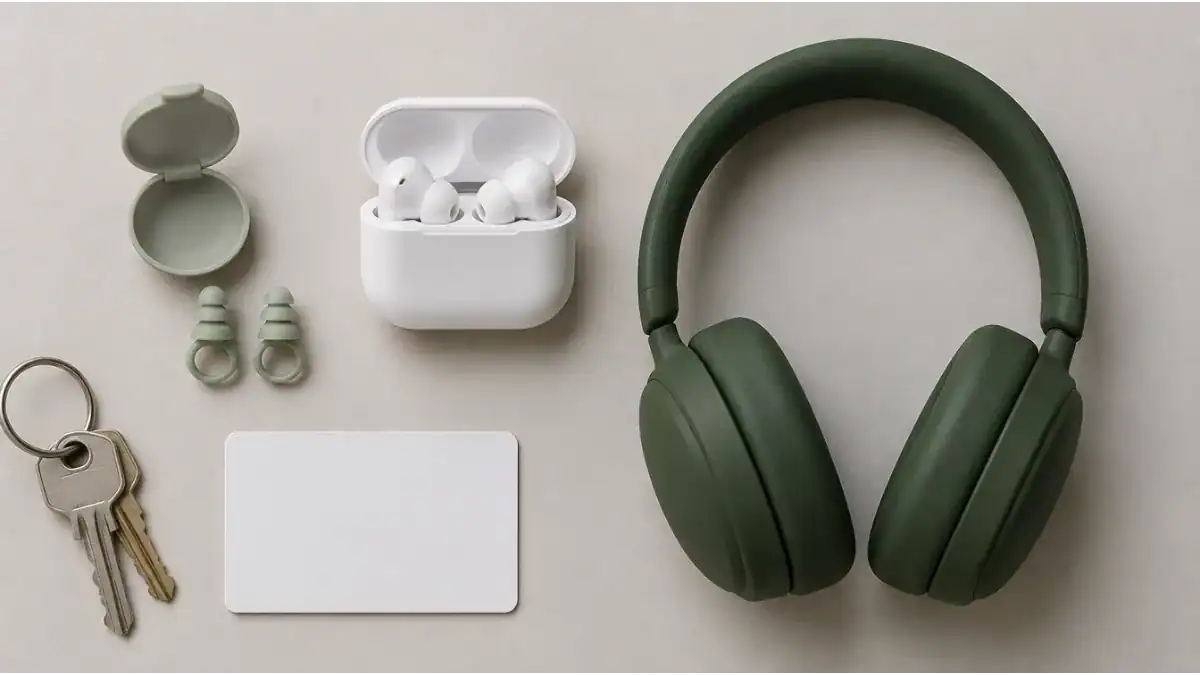
The short answer: noise-cancelling earbuds or headphones are better for the low, steady rumble of a train, bus or highway, and they let you play audio at a lower volume. Earplugs are better for sharp, high sounds like brake screech, they cost about $25, and they never need charging. So-called noise cancelling earplugs don’t cancel anything. They block sound with a seal. For a loud city commute, the most useful setup is both: noise-cancelling earbuds for the ride, a pair of earplugs in the bag as backup.
A subway pulls in and half the platform does the same thing. Shoulders up, a finger in one ear, a wince. Then the doors open and everyone turns their music up to get over the rumble.
There are two ways to turn a commute down instead. One costs about as much as lunch and fits on a keyring. The other costs about ten times that and lives on a charger. They don’t do the same job, and most comparisons skip that part.
Two kinds of noise, two kinds of fix
Commute noise comes in two flavors. There’s the drone: engine, tunnel rumble, tires on a highway. It’s low and constant. Then there’s the spike: steel brakes, a door chime, someone’s speakerphone. It’s high and sudden.
Start with how loud it gets. When researchers from the University of Washington and Columbia measured New York’s transit system, subways averaged 80.4 decibels, and the loudest platform reading hit 102.1. Roughly half of the subway peaks were over 90. The EPA and the World Health Organization recommend a daily average of no more than 70.
How loud is that
A subway commute against everyday sound levels
Source: Neitzel, Gershon and colleagues, American Journal of Public Health, 2009. Decibels are logarithmic: every 10 dB is ten times the sound energy.
We covered what that does to the body in the noise we’ve stopped hearing. This piece is about the gear, and the gear splits along the same line as the noise.
Active noise cancellation listens to incoming sound with tiny microphones and plays the mirror image to erase it. That works best on low, steady sound. Higher sounds like voices are harder to cancel, as Sennheiser’s own support pages admit. What handles those is the physical seal: an ear tip or ear cup blocking the path.
An earplug is all seal and no electronics. That one fact explains most of what follows.
What earplugs do well, and what they don’t
The earplugs commuters ask about now aren’t the orange foam kind. They’re small reusable silicone ones with a ring on the end, and Loop is the name most people know. Google searches for them have climbed steadily over the past five years.
First, a naming problem. People search for “noise cancelling earplugs,” and nothing sold under that description cancels noise. There’s no microphone and no battery. They reduce sound by plugging the ear canal, some with a small filter so the world sounds turned down, not underwater.
The ratings vary a lot by model. Per Loop’s published figures, gathered in HearingTracker’s lab review:
| Model | Reduction (SNR) | Price | Built for |
|---|---|---|---|
| Loop Quiet 2 | 24 dB | $24.95 | Focus, travel, commutes, sleep |
| Loop Experience 2 | 17 dB | $34.95 | Concerts, where music should stay clear |
| Loop Engage 2 | 16 dB | $34.95 | Conversation with the background turned down |
| Loop Switch 2 | Three modes | $59.95 | One pair that switches between all three |
SNR is the European rating. The American one, NRR, comes out lower for the same plug: the Quiet 2 is 24 dB by one and 14 by the other. Neither number survives a bad fit. Loop ships four tip sizes for that reason.
What they do well: they take the edge off everything at once, including the high, sharp sounds that noise cancelling lets through. There’s nothing to charge, and at this price losing one isn’t a crisis.
What they don’t: play audio. And a sealed ear makes your own voice and footsteps sound boomy, which some people never get used to.
Lab numbers back this up. When SoundGuys measured them, the Quiet 2 took up to 37 decibels off high sounds and about 11 off low ones. A 17-cent pair of foam plugs landed in the same place: up to 40 off the highs, about 5 off the lows. Good against screech, weak against rumble. That’s every earplug.
Buyers run into the same limit. The Quiet 2 holds 4.1 stars across roughly 35,000 Amazon ratings, and the unhappy reviews repeat three complaints. It muffles the world without muting it. The fit is hit or miss, even with four tip sizes. And the little case pops open in a bag. The Loop forum on Reddit keeps a standing warning for new buyers: if it’s loud enough, you’ll still hear it.
So are Loop earplugs worth it for commuting? Yes, if what you want is the volume turned down and nothing playing. The Quiet 2 has the highest rating in the range and costs the least, and HearingTracker’s reviewer called it the best noise blocker of the four. No, if you’re expecting silence. And if $25 feels like a lot for silicone, a tub of foam plugs does the main job for about 20 cents a pair. They’re just less pleasant to wear and fiddlier to put in.
The filtered Engage 2 makes sense if you need to hear a colleague or an announcement on the way in. Buyers who wanted more blocking were disappointed. It turns a room down. It isn’t hearing protection. We’d skip the Switch 2 for commuting. Reviewers and buyers both call it bulkier, and it costs more than a Quiet 2 and a tub of foam plugs combined.
The earplug picks
Reusable pick
Loop Quiet 2

Rated 24 dB (SNR), with four tip sizes, and washable. 4.1 stars across about 35,000 Amazon ratings. It turns the volume down. It won't mute a train.
For a quieter ride with no audio.
Cheapest, most blocking
Mack's Ultra Soft Foam Earplugs (50 pairs)

Rated NRR 33, the highest here, at about 20 cents a pair. 4.5 stars across about 52,000 ratings. Roll them tight or they won't seal.
For finding out if earplugs help before spending $25.
Hear and be heard
Loop Engage 2

A filter takes 16 dB (SNR) off the background and keeps voices audible. Buyers who wanted heavy blocking were let down.
For commutes with a colleague or kids.

What noise cancelling does well, and what it doesn’t
Noise-cancelling earbuds do two jobs. The ear tip seals like a mild earplug, and the electronics remove the drone on top of that. On a train or bus, where most of the noise is drone, the effect is hard to match.
The second benefit gets less attention. When it’s loud, we turn the volume up to hear over it. Richard Neitzel, who led the New York transit study, has said people often add four to six decibels that way. In a 2022 lab study with 80 decibels of background noise, listeners using ordinary earphones and headphones set their music above 85 decibels on average. With noise-cancelling in-ear earphones, the average stayed below 75. Only ten people tested that last pair, so it’s a small result, but it points where you’d expect. Quieter surroundings, quieter music.
That’s the best argument for noise cancelling on a commute. With the rumble gone, the podcast doesn’t need to be loud, and we stop doing the thing that makes it worse.
What it doesn’t do: stop the screech as well as it stops the rumble. Work with a dead battery. Come cheap. And most noise-cancelling earbuds carry no hearing-protection rating, so there’s no number to hold up against an earplug’s.
The testers don’t agree on which pair is best. Tom’s Guide gives it to Bose. SoundGuys gives it to Apple. TechGearLab’s measurements put Sony first. We haven’t lab-tested any of them ourselves. Choosing by the phone in your pocket is the sensible tiebreaker.
The buyer reviews are mostly about living with them. The AirPods Pro 3 hold 4.4 stars across about 18,000 Amazon ratings, and the complaints are mostly about fit, especially in small ears. That matters, because noise cancelling is only as good as the seal. The Bose pair sits at 3.9. Its unhappy buyers still praise the noise cancelling. What they complain about is the app, the fit, and earbuds that stopped syncing within weeks. If you buy the Bose, buy it somewhere returns are easy.
On a budget, skip the big names. RTINGS calls the Soundcore Space A40 the best earbuds under $100 it has tested, and about 25,000 Amazon buyers put it at 4.2 stars.
The noise-cancelling picks
For iPhone
Apple AirPods Pro 3
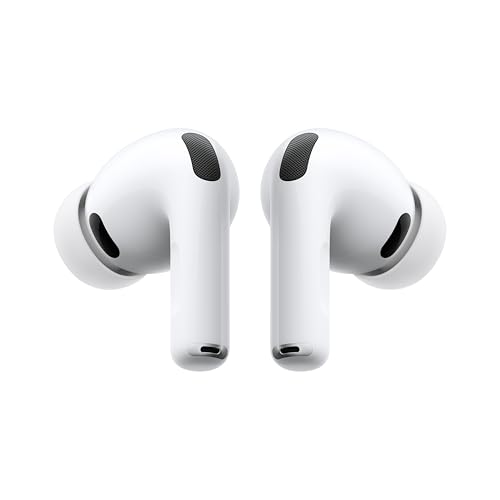
List price $249, often lower on Amazon. Top-ranked for noise cancelling by SoundGuys. 4.4 stars; the main complaint is fit in small ears.
For iPhone owners who want one pair for everything.
Strongest cancelling
Bose QuietComfort Ultra Earbuds (2nd Gen)

List price $299. Rated the best noise cancelling by Tom's Guide. 3.9 stars on Amazon, with complaints about the app and reliability.
For the loudest commutes, bought with a return window.
On a budget
Soundcore Space A40

About $60. The best earbuds under $100 that RTINGS has tested, with long battery life. 4.2 stars across about 25,000 ratings.
For trying noise cancelling without the $250 bet.
One more cost to plan for: noise cancelling drains a battery, and a dead earbud is just a bad earplug. A case that tops them up helps. So does knowing where the phone’s own battery goes on a commute.
How to choose for your commute
Earplugs vs noise cancelling
Which one for which problem
Subway or train, most days. Noise-cancelling earbuds earn their price here. Add earplugs for the platform, or for the day the case is at 4%.
Bus. Mostly drone. Noise cancelling does nearly all the work.
Walking or cycling. Neither, at full strength. On a street, hearing what’s behind you is the safety system. Use transparency mode, one ear, or nothing.
Driving. Skip both. Several states, California among them, don’t allow earplugs or earphones in both ears behind the wheel. The fix in a car is closed windows and a lower volume.
Noise wears you out, music or not. Start with earplugs. They’re cheap enough to find out in a week.
The case for carrying both
Most comparisons end by picking a winner. We’d buy both, because they don’t do the same job. Earbuds are for the days we want something playing. Earplugs are for the days we don’t.
Earplugs weigh a few grams and live on a keyring or in the tech pouch for months without being thought about. They’re there for the platform, for the day the earbuds die, and for the evenings when we’re done listening to people. A quiet ride pairs well with a phone that stays in the bag.
Earbuds cover the rest. The order to buy them in depends on which problem is bigger. If the commute is loud and you listen to something every day, earbuds first. If it’s the noise itself that wears on you, earplugs first, and see how far $25 goes.
The city isn’t going to turn itself down. The train will still scream into the station tomorrow at 8:14. The difference is whether there’s something in the bag for it.
Carry smarter. Commute better.
Common questions about earplugs and noise-cancelling headphones
Are earplugs better than noise-cancelling headphones?
They do different jobs. Earplugs block sound with a physical seal, which works across low and high sounds and needs no battery, but they play no audio. Noise-cancelling headphones are stronger against low, steady rumble such as trains and engines, and let you listen at a lower volume. For a loud commute, many people are best served by carrying both.
What are noise cancelling earplugs?
The term usually refers to reusable silicone earplugs such as Loop. They do not actively cancel noise. There is no microphone or battery. They reduce sound passively by sealing the ear canal, and some models add a filter so speech and music stay clearer at a lower level.
Are Loop earplugs worth it for commuting?
For a quieter ride without audio, yes, with realistic expectations: they reduce noise and do not mute it. The Loop Quiet 2 has the highest rating in the range at 24 dB (SNR) and the lowest price at $24.95. Foam earplugs cost far less and carry higher ratings, but are less comfortable and harder to fit. Filtered models such as Engage 2 reduce less, about 16 dB (SNR), and keep voices clearer.
Do noise-cancelling headphones protect your hearing?
Indirectly. Most carry no hearing-protection rating, but by lowering background noise they let people listen at lower volumes. In a 2022 lab study with 80 dB of background noise, average listening levels were above 85 dB with ordinary earphones and below 75 dB with noise-cancelling in-ear earphones.
How loud is a subway commute?
A 2009 study of New York City transit measured an average of 80.4 dBA on subways and a highest reading of 102.1 dBA on a platform. The EPA and World Health Organization recommend a 24-hour average of no more than 70 dBA.
Is it safe to wear noise-cancelling headphones while walking or cycling?
Full noise cancelling removes sounds that warn of traffic. On streets, use transparency mode, a single earbud, or nothing. Several US states also restrict wearing earphones or earplugs in both ears while driving.
Life on the go should be easier.
One overlooked commute problem each week, and the simplest fix.
Keep reading
City Commute
The Noise You’ve Stopped Hearing
Why the background roar of a commute still drains us.
Mind & Commute
What to Do Instead of Scrolling
Nine phone-free things that fit inside a train ride.
Daily Carry
Work Bag Essentials
The short list worth carrying daily, and the two-pouch system.
Daily Carry
Why Our Phone Battery Drains So Fast
The causes we overlook, and the backup that ends the 20% panic.